




Bénoline Inc.

Gestion locative et conseil immobilier

Home / Blog / Rental Cottage Taxation in Lanaudière

Rental Cottage Taxation in Lanaudière: What Property Owners Need to Know

From CITQ to income taxes, GST/QST and the sale — the essential rules explained simply.

March 2026

You own a cottage in Lanaudière — perhaps in Mandeville, Sainte-Émélie-de-l'Énergie, Saint-Gabriel or on a lakefront — and you rent it to vacationers. The popularity of rental cottages has exploded in recent years, and with it, regulatory and tax obligations have followed. 

This guide fills that gap. We explain the essentials: what to declare, how taxes work, the deductions you're entitled to, and what to anticipate if you ever sell. No jargon, no detours.

Bénoline Series — Rental Property Taxation in Québec

1. The CITQ: The Basic Requirement Before Everything Else

Before even addressing taxation, there's the regulatory side. In Quebec, all tourist rentals of less than 31 days are governed by law. Concretely, this means:

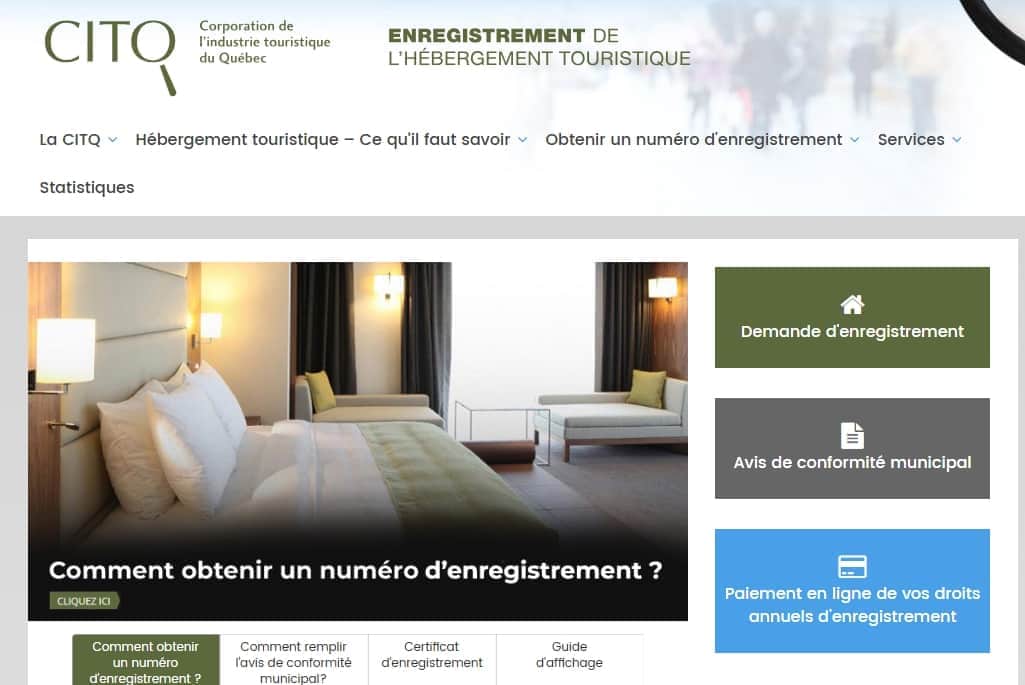
  • You must register with the CITQ (Corporation de l'industrie touristique du Québec).
  • Your cottage must be inspected and receive a registration certificate.
  • Your 6-digit CITQ number must appear in all your listings (Airbnb, VRBO, Kijiji, etc.).
  • You must collect the accommodation tax (3.5% of the nightly rate — e.g., for a $300/night cottage, that's $10.50, not $3.50) and remit it to Revenu Québec.
  • 💡Bénoline Tip: Airbnb and VRBO generally collect the 3.5% tax automatically on your behalf. Check your dashboard before remitting it yourself to avoid double payment. Depending on your situation, it may be preferable to collect and remit it yourself — see our GST/QST article to understand why.


👉 To learn more:

Without a valid CITQ number, you are operating illegally. For individual owners, fines range from $2,500 to $25,000 per infraction (and double for repeat offences). For companies or platforms that publish non-compliant listings, fines can reach $100,000. Airbnb automatically flags listings without a valid number — Source: Government of Quebec, updated November 2025.

2. Reporting Your Income: The Essentials

All your cottage rental income — Airbnb, VRBO, word-of-mouth — is taxable and must be reported in your annual tax return.

  • Form T776 (federal — CRA) + TP-128 (provincial — ARQ / Revenu Québec).
  • Report the gross amount received — before platform fees (commissions are separately deductible).
  • Cleaning fees charged to renters = gross income to declare.

👉 Download the forms: T776 — CRA and TP-128 — Revenu Québec. For a complete guide: Reporting Your Rental Income in Quebec.

3. GST/QST on Your Rental Cottage

The GST (Goods and Services Tax — federal) and QST (Quebec Sales Tax — provincial) apply to short-term rentals. Short-term rental (less than 30 consecutive days) is a commercial activity in the eyes of tax authorities.

Situation GST (5%) QST (9.975%)
ST revenue < $30,000/4 quarters Voluntary GST/QST registration: registering before the $30,000 threshold allows you to recover taxes on your expenses. Same
ST revenue > $30,000/4 quarters Mandatory registration Mandatory registration
Rental > 30 consecutive days Exempt Exempt


  • 💡 Conseil Bénoline: Vous louez votre chalet quelques semaines par été? Même 4 ou 5 séjours Airbnb dans l'année, ça se déclare — et la bonne nouvelle: toutes les dépenses directement liées à ces séjours (ménage, commissions Airbnb, fournitures d'accueil) sont déductibles à 100 %.


👉 Everything about the three taxes (GST, QST and accommodation tax):
Accommodation Tax, GST and QST — The Guide for Short-Term Rentals.

4. Mixed Use: When You Also Use Your Cottage Personally

The reality for most cottage owners: you rent it out, but you also enjoy it personally. For tax purposes, you can only deduct the portion of expenses proportional to rental use.

The method accepted by the CRA: Weeks rented ÷ 52 weeks = rental ratio.

Weeks rented / year Rental ratio Example: $4,200 in property taxes
10 weeks 19.2% $808
20 weeks 38.5% $1,617
30 weeks 57.7% $2,423
42 weeks 80.8% $3,394
  • 💡 Bénoline Tip: Keep an occupancy log and record rental days, maintenance days, and personal use — it’s your protection in case of an audit.

5. Deductible Expenses for Your Cottage

The same categories as a rental property, with some specific features of cottages:

  • Mortgage interest (prorated to rental ratio)
  • Property taxes (prorated)
  • Insurance — including short-term rental insurance specifically required by CITQ
  • Electricity, heating, internet (prorated)
  • Routine maintenance: cleaning, snow removal, pool/spa care (prorated)
  • Cleaning fees between renters (100% deductible, directly attributable)
  • Airbnb/VRBO platform fees (100% deductible)
  • Welcome supplies: coffee, firewood, cleaning products (100% if exclusively for renters)

👉 For the complete list with examples and amounts: Tax Deductions for Your Rental Cottage in Lanaudière.

6. What Happens When You Sell

A rental cottage does not have the same tax treatment as a principal residence on sale — and this can represent a significant tax impact if you don't prepare for it.

  • Capital gain: the profit realized on the sale is taxable at 50% (inclusion rate — confirmed maintained in 2026).
  • Recapture of depreciation: if you claimed CCA, the CRA recovers these deductions on sale — taxed at 100% as ordinary income (not at 50%).
  • Land never depreciates: only the building value enters the CCA calculation.
  • Sales taxes: if the cottage was operated commercially (short-term), the sale may be subject to GST/QST.
  • Change of use: if you convert your personal cottage into a rental property (or vice versa), the CRA treats it as a "deemed disposition" at fair market value — even without an actual sale. This can trigger a taxable capital gain. Consult your accountant before making this change.
  • ⚠️ Bénoline Tip: Plan your sale at least one year in advance. The combined impact of CCA recapture + capital gain can be substantial — and several strategies can mitigate them if planned ahead

The 5 Most Common Mistakes

  • Mistake 1 — Operating without a CITQ number — it's illegal, regardless of whether you declare your income.
  • Mistake 2 — Not declaring Airbnb income — the CRA has access to platform data.
  • Mistake 3 — Deducting 100% of expenses without prorating personal use.
  • Mistake 4 — Forgetting to collect and remit the accommodation tax — 3.5% of the nightly rate, not a fixed amount.
  • Mistake 5 — Selling without planning the tax impact — capital gain + CCA recapture can add up.

Conclusion

Renting a cottage in Lanaudière is a great way to optimize a real estate asset. But it requires the fiscal and regulatory rigour that is often underestimated at the start. The good news: by getting organized from the beginning, all of this becomes routine.

📌Concrete action:  if you don't yet have your CITQ number, start there — it's the foundation of everything else. Then set up a simple occupancy log and expense file.

👉 Good to Know for Property Owners

  • CITQ required: a registration number is required for all tourist rentals of less than 31 days in Quebec.
  • Keep an occupancy log (days rented, maintenance, personal use) — it's your protection in an audit.
  • Sale and capital gain: selling a rental cottage generates a taxable capital gain — plan with an accountant before listing.
  • Direct expenses at 100%: cleaning and Airbnb commissions are deductible without proration.
  • Voluntary GST/QST registration: registering before the $30,000 threshold lets you recover taxes on your expenses.

👉 FAQ About Rental Cottage Taxation

Q: Do I need a CITQ number to rent my cottage in Lanaudière?

A: Yes. All tourist rentals of less than 31 days in Quebec must be registered with the CITQ. Without a valid number, you are operating illegally — fines can reach $25,000.

Q: Do I have to pay GST/QST if I rent my cottage on Airbnb?

A: If your ST revenues exceed $30,000 over 4 consecutive quarters, you must register for taxes. Registering before this threshold is often advantageous: you recover taxes on your expenses.

Q: How can I prove my cottage is primarily for rental use?

A: Keep a detailed occupancy log. Airbnb reports, your contractor invoices and your CITQ number are also useful evidence.

Q: Is there a capital gain when I sell my rental cottage?

A: Yes. The sale of a rental cottage generates a taxable capital gain at 50%. If you claimed CCA, the recapture is added, taxed as ordinary income.

This blog content is for informational purposes only. It draws on the Civil Code of Québec and the Tribunal administratif du logement Act, as well as guidelines from Revenu Québec, the CRA and the CITQ. Laws change — consult a qualified professional (accountant, lawyer or tax advisor) before making any tax or legal decision. For any update or correction, contact us!

(579) 381-2000

©2026 Bénoline Inc. All rights reserved - Powered byLodgify